
CES 2026: We Came, We Walked, We Learned
Every January, the Consumer Electronics Show (CES) showcases the best of hardware products from around the world. Last week, five members of the EverCurrent team attended the weeklong event, each of us for the first time. Unlike the 4100+ exhibitors at CES, we did not have a booth or conference room, instead we walked the floors to learn about the product development challenges hardware companies are facing as they compete in the market.
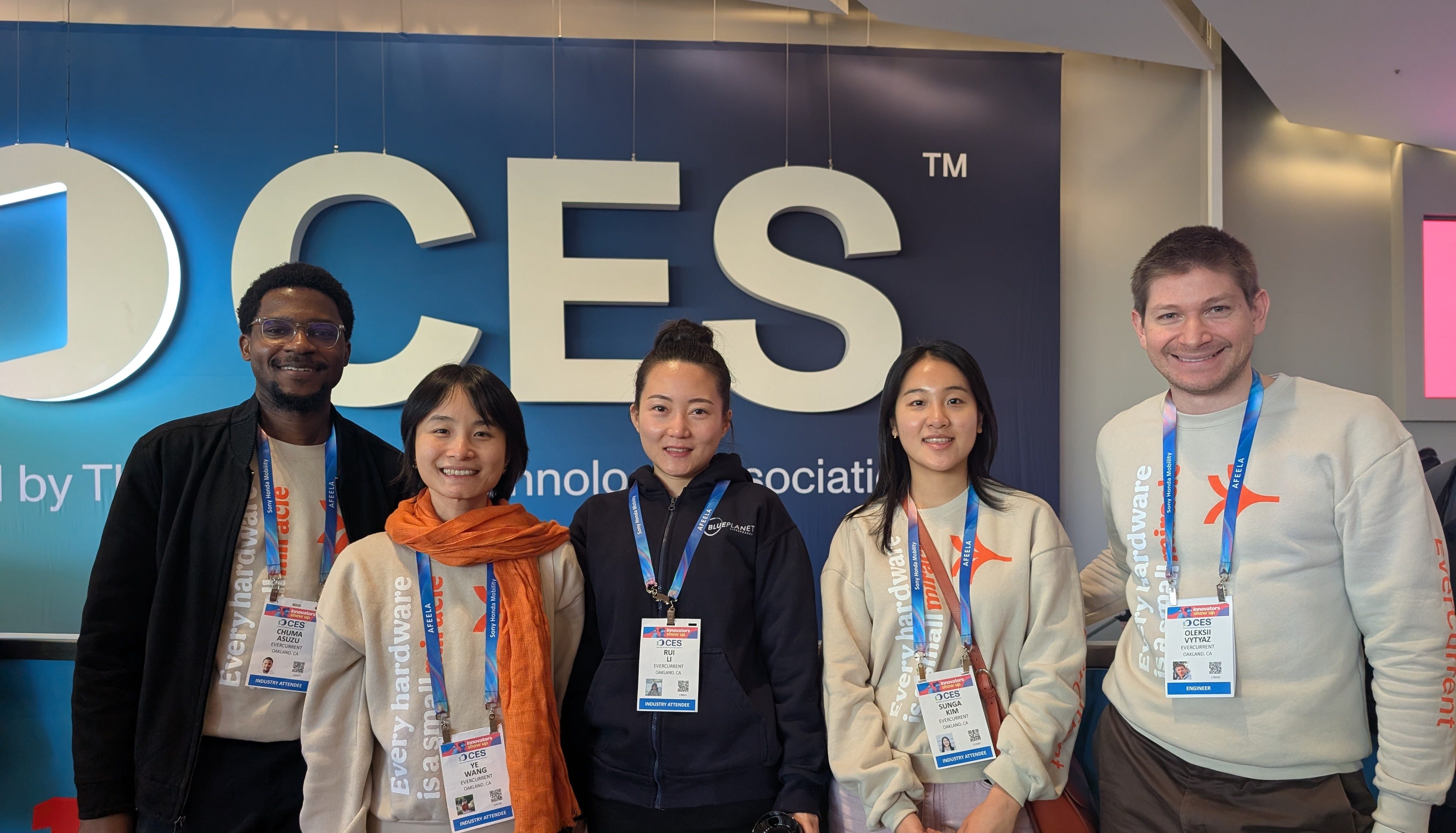
We learned a few things and walked about 20,000 steps a day, which is perhaps the truest measure of a successful CES. This blog post is a recap of our experience, capturing the key takeaways and insights we gathered from three days on the ground in Las Vegas. Our journey at CES covered several critical areas, offering a multifaceted view of the current state and future trajectory of hardware product development.
Hardware as a race car
From the first day, we learned of unique use cases of artificial intelligence in hardware product development. One senior executive shared how she uses Microsoft Copilot routinely to analyze their manufacturing data and to generate a business case for factory expansion. We had multiple engineers talk about how they use AI in documentation and for debugging firmware issues. The head of a product development studio shared how he uses AI to give visibility across multiple programs and to trace the “why” behind the decisions, he mentioned how surprised he’s been with the good quality of the results gotten.
What really resonated with product development leaders at CES was the need for proactive monitoring of their product development processes so that they’re less reactionary to the changes that inevitably occur. We learned about the need for AI in context gathering, to enable the traceability of product development decisions in order to get to market faster. What’s key though is that AI should not get in the way: as one founder nicely put it, he runs his hardware company like a race car: some structure so it doesn’t fall apart, but not too much structure that it slows it down.
Spotlighting women in hardware
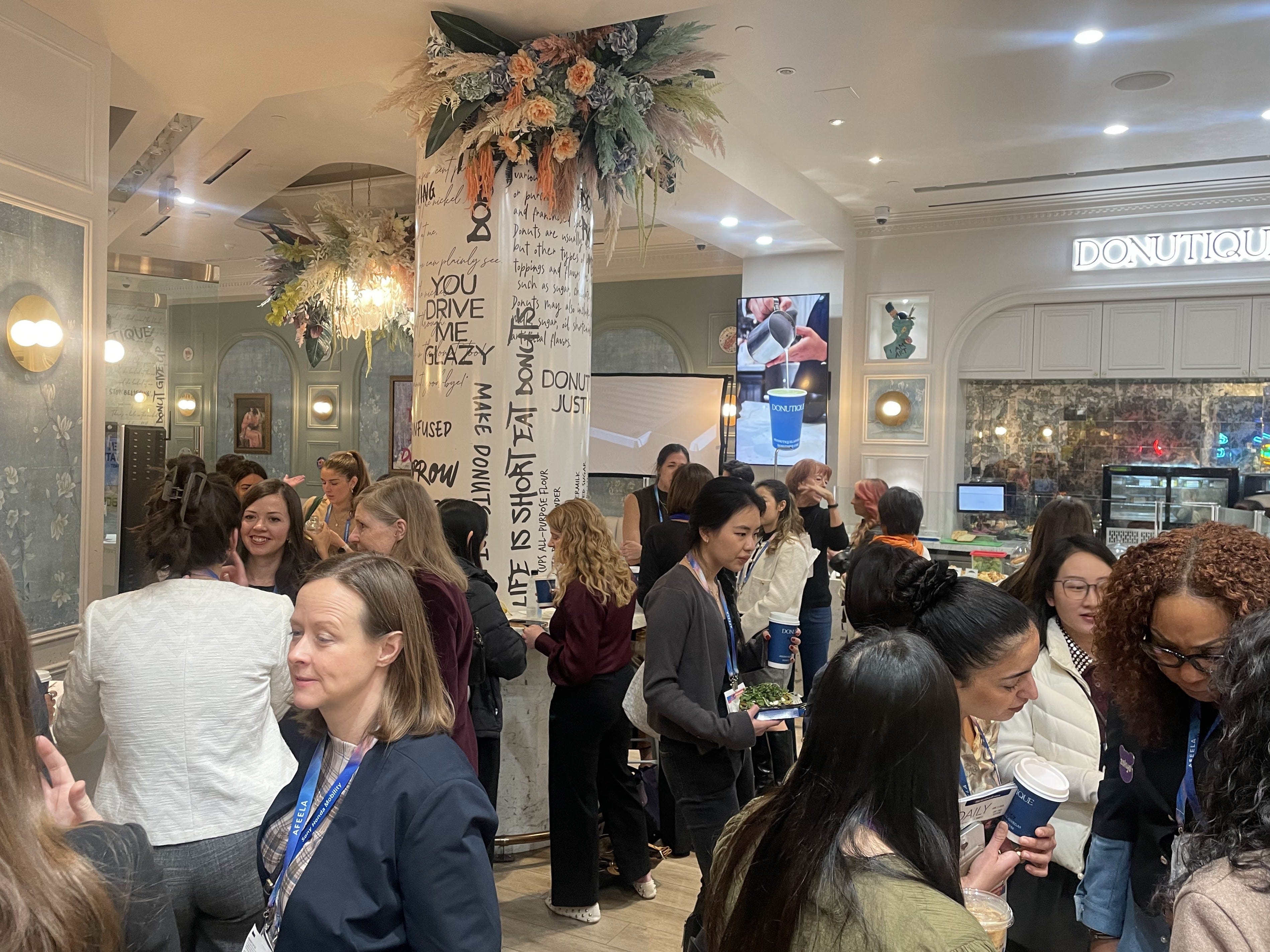
On Wednesday morning, EverCurrent and our friends at Acorn Product Development hosted a Women in Innovation Breakfast event where we connected with women at CES across technology, innovation, and manufacturing. It was great to learn about the work being done in different sectors, but also to connect on an informal level with other women in the ecosystem.
Over some donuts and coffee in a room of 99 people (out of close to 400 signups, due to location accommodations), we had discussions about what 2026 could look like across robotics (Sphero), medical wearables (Petal), companion devices, gaming consoles (Level), as well as the challenges faced when developing these hardware products. We came out of that event really energized about our work and having a renewed sense of why CES is such a great place.
Big business manufacturing
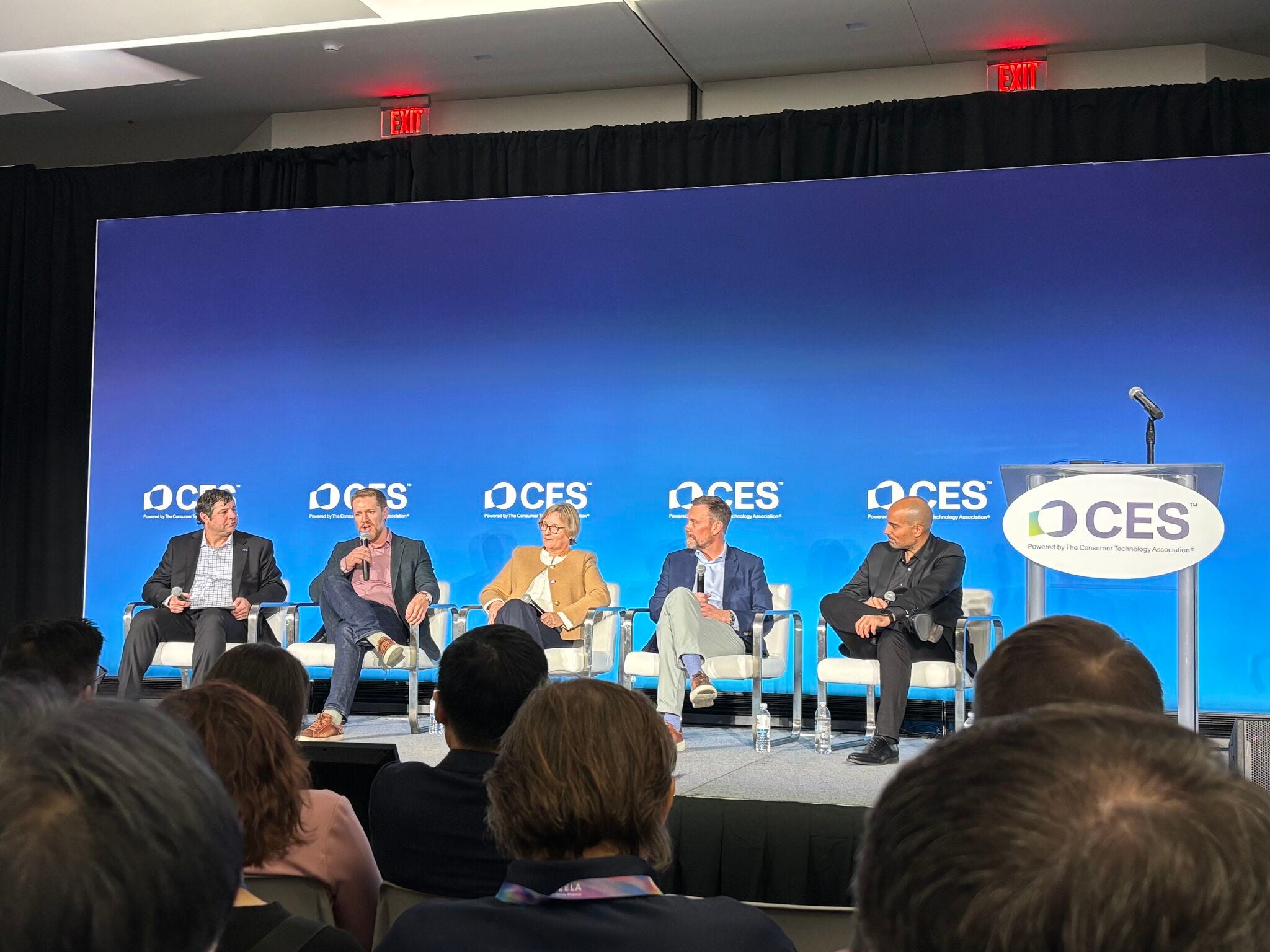
Later on Wednesday, we attended a few sessions as part of the Manufacturing Track running concurrently with the show. Of particular interest was the session titled “Beyond AI: The Technologies Powering the Future of Manufacturing” which featured a panel of four senior executives: Michelangelo Canzoneri, Global Head of Group Smart Manufacturing at EMD Electronics; Catherine Kniker, Chief Marketing & Sustainability Officer at PTC; Adam Cooper, Manufacturing Transformation Principal at EY; and Jon Van Wyck, Executive Vice President & Chief Strategy Officer at 3M. The session was moderated by Jeff Puma of the National Association of Manufacturers.
All four executives spoke about applying AI at scale in the manufacturing industry and the different strategies they have applied to achieve success. Their consensus was that applying AI in manufacturing is not an engineering problem, but an organizational one where the data for the system has to be nurtured, and metrics must be driven across the company. Mr Canzoneri spoke about how applying AI in a manufacturing plant has led to improvements in their ability to spot efficiencies across their manufacturing processes, Ms Kniker shared that with AI having clear engineering requirements become even more important, Mr Van Wyck shared that implementing AI needs to go beyond pilots even when not all the parameters are known, and finally Mr Cooper advised executives to make a choice to be bold in adopting AI and adapt quickly.
Fascinating tech on display
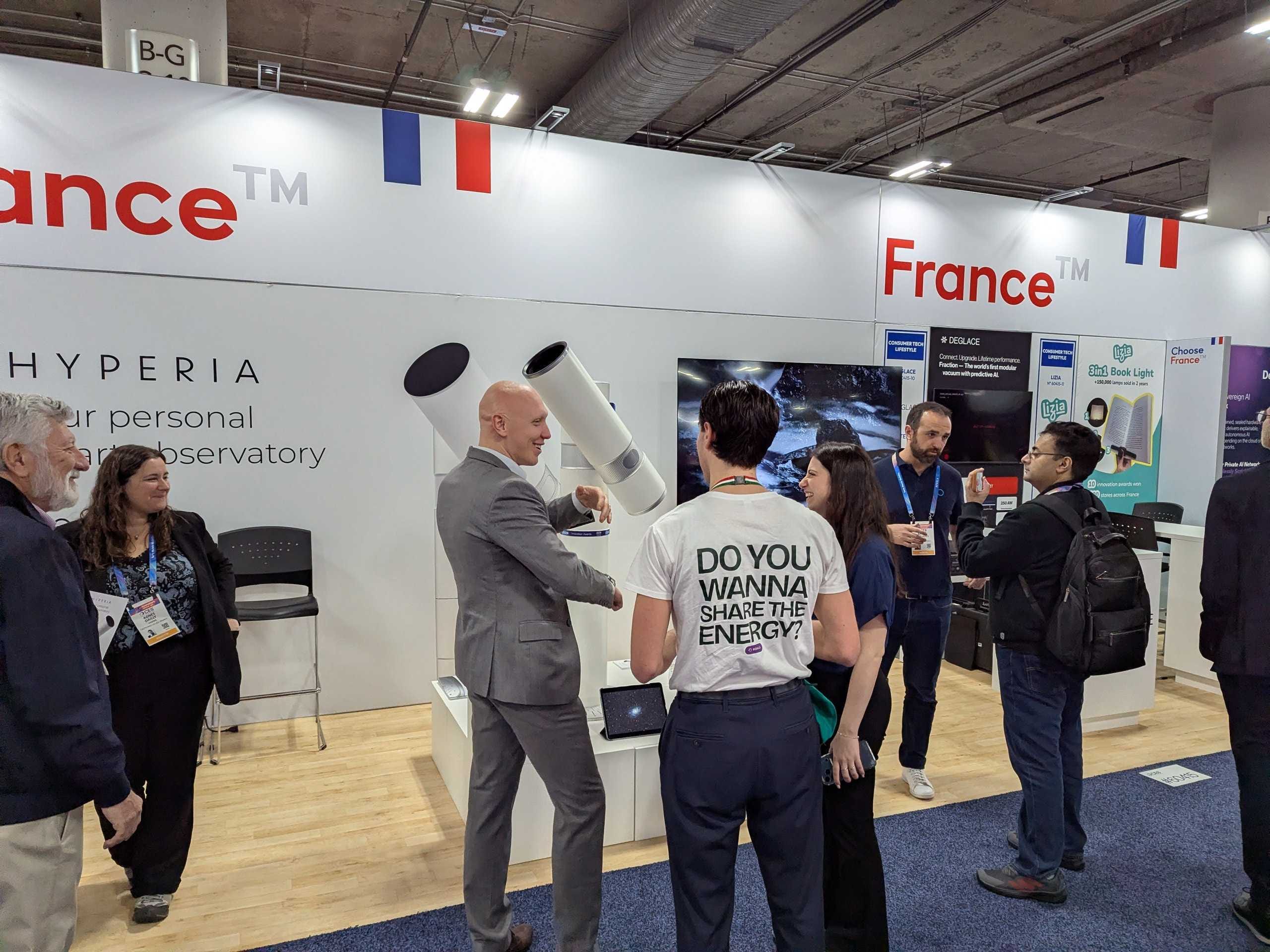
What also caught our attention were the number of digital manufacturing products on display, ranging from successful Kickstarter campaigns built by small teams that are now in the market to more established companies who were part of the Digital Manufacturing Showcase. We enjoyed visiting the booths of Vaonis, who showed an impressive smartphone-integrated telescope and described their ecosystem of automated “observation stations;” Lumafield, who showed their x-ray CT scanning technology and had a really useful lenticular photograph to show the results of their scans; and Skwheel, who demoed their exciting new skating product adapted from ski riding technology.
While at CES, we also caught up on the latest technology on display. There were an enormous amount of robots: whether for lawn mowing, swimming pool cleaning, glass panel wiping, ping-pong playing, or boxing. Humanoids took a large section of the show, with different companies showing their latest advancements. There was a buzzing sense of excitement around “Physical AI,” ranging from Jensen Huang’s keynote to the breakout sessions we attended.
Coming back home
We had so many great conversations with people who welcomed us to their booth and even shared their small miracles - moments in their hardware development processes where they found success in executing their vision. Hardware teams were quite ready to also share their challenges with us, particularly in managing the different tools to get a clear signal of their schedule. In line with the manufacturing track, we saw first hand how AI adoption is growing in hardware product development and how visionary teams are applying it already in their operations.
Being at CES reinforced how we’re building the right tool for hardware teams; one that builds traceability across changes and decisions so engineers can keep track of their builds without sacrificing time, one that helps teams have the right knowledge at the right time with the right context, one that closes the gap between requirements and build tickets, and finally, to quote Ben Thompson, one that creates totems instead of silos. We’re excited to be building AI to accelerate hardware development!