
Currents, from EverCurrent #1
January was a busy month at EverCurrent:
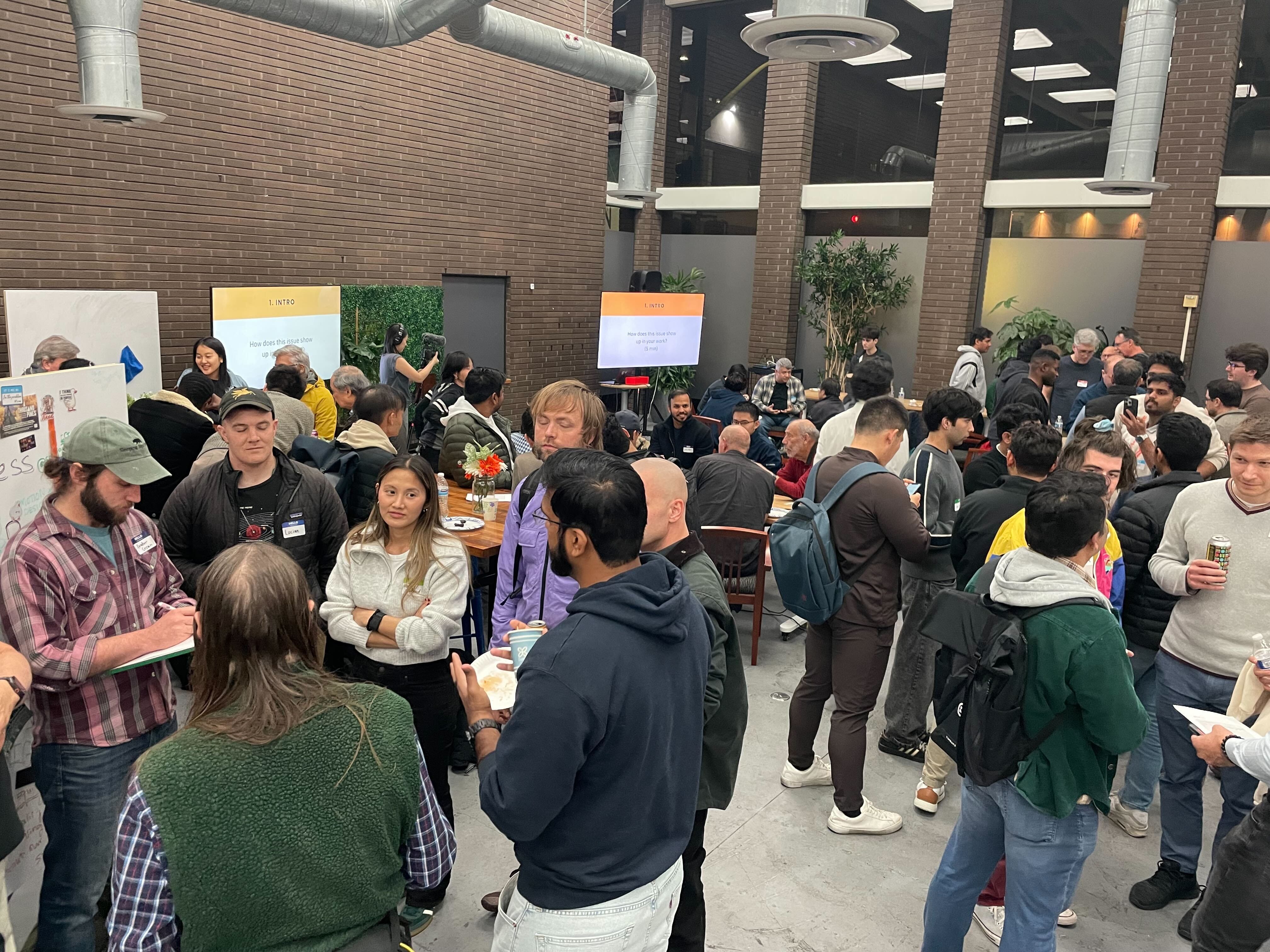
We co-hosted the Oakland Hardware Meetup where we ran a skillshare activity focused on the process issues faced by hardware engineers.
We visited the Consumer Electronic Show walking the tradeshow floors and learning about “Physical AI” from the perspectives of manufacturing executives and hardware startups.
Ye participated in a live chat with Devansh (of Artificial Intelligence Made Simple) talking about AI in hardware and its possibilities for improving the capacity of hardware engineering teams.
Success creates complexity
At the Oakland Hardware Meetup, engineers shared three significant issues affecting hardware teams: lack of visibility due to cross-functional teams working with their own tools, scope creep due to rapid growth, and burnout from a lack of prioritization of tasks.
For the first issue, engineers discussed how cross-functional teams often lack organizational alignment which requires a lot of meetings to resolve. For the second, as hardware teams grow with new engineers, programs, and customers, the scope that the engineering team covers also expands; no one can keep track of decisions anymore or recall why a particular build was made that way. On burnout, one engineer shared that workplaces soon become places “where everyone is busy but not enough is getting built.”
How hardware teams use AI today
At the meetup, there was also room for engineers to share solutions to these issues: faster decision making so that all members of the team are aligned without having repeated meetings, realistic scheduling of tasks based on priorities and available resources, and communicating clear organization-wide goals with prioritized action items.
Executives are already using AI to do this, by drawing context from across their organization. At CES, we attended a panel with senior executives from 3M, EMD Electronics, PTC, and EY, who shared their experiences deploying AI at scale. Their consensus was that applying AI in manufacturing is not an engineering problem, but an organizational one where the data for the system has to be nurtured, and metrics must be driven across the company. They called for executives to be bold and go further than just pilots, to empower managers track goals across the organization and use the data available to break information silos that inevitably occur in hardware organizations.

How to solve process debt
Back home from CES, Ye spoke with Devansh about process debt that hardware teams acquire while growing. With shorter times to market expected and leaner engineering teams, optimizing their product development processes takes a back seat to product delivery. One of the risks of this speed is having gaps between their requirements and builds throughout the product development cycle. AI can help with that, by proactively surfacing gaps and risks across tools, functions, and product lines for a realistic business view.

Industry reports show that cross-functional teams in hardware engineering have a difficult time aligning on priorities and goals across the organization. Only 15% of engineers in such teams report their roles and responsibilities as being clear. But that’s not all, the workforce composition of these teams are also changing necessitating a reduction in time to proficiency for new engineers. We believe that’s the perfect task for AI: turning scattered critical information across different tools into aligned current context without changing the processes or workflows that engineering teams already use. That’s what we’re up to at EverCurrent.
If you are a member of a hardware team growing rapidly and seeing these same silos in your current program(s), we’d love to hear from you. Are you taking full advantage of the data you already have?
PS: We’re looking to host an event in Toronto soon, let us know who to invite!