
When Revenue Goes Up and Costs Go Down: AI’s New Economic Equation
Last night at Dell Technologies Startup Day at SHACK15, one theme echoed throughout the evening: AI is fundamentally reshaping the economics of how businesses operate.
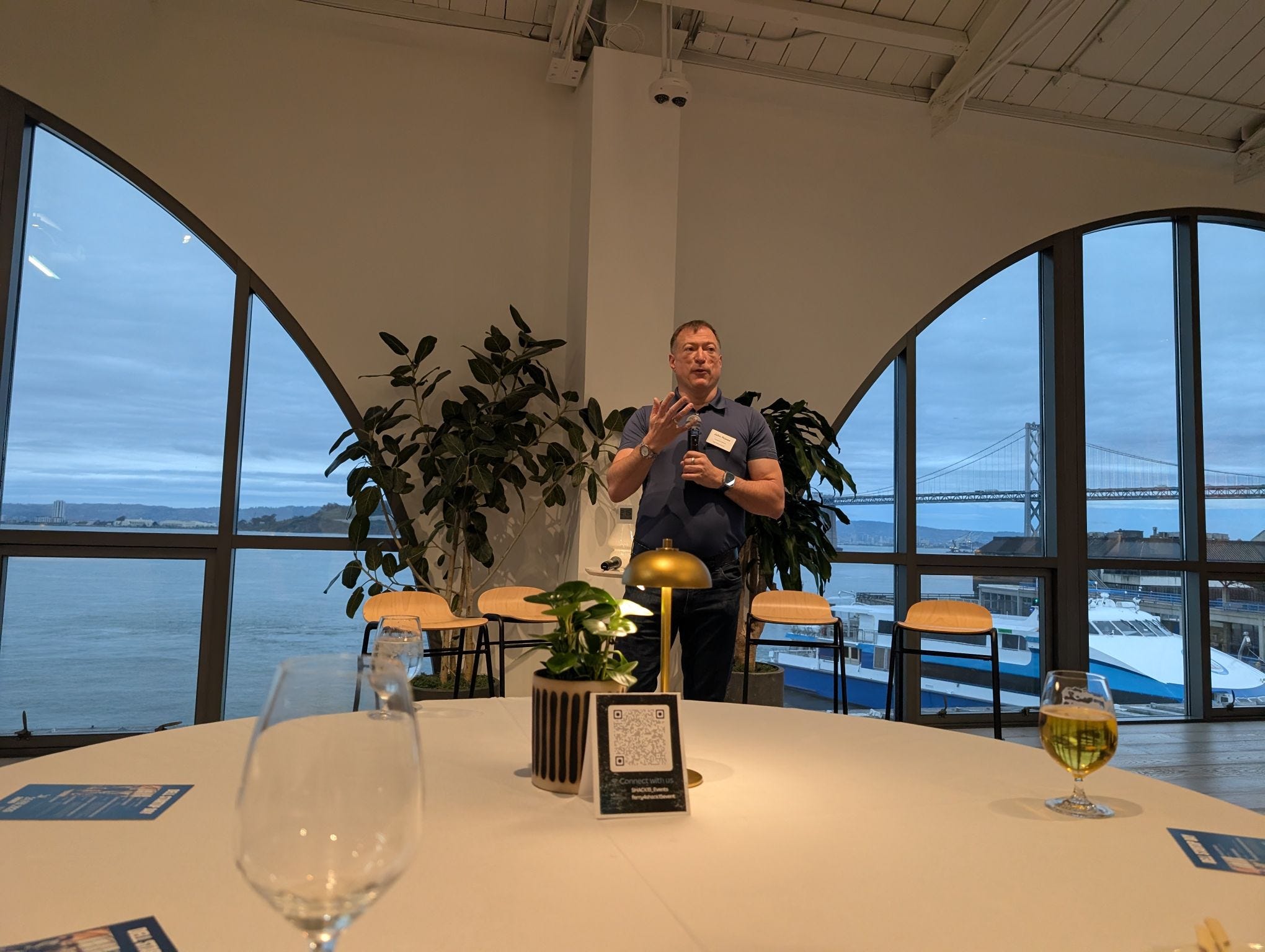
As John Roese put it, we are entering a new era where AI simultaneously drives revenue upward while pushing costs downward. Historically, that combination has been extremely difficult to achieve at scale.
For decades, organizations have had to choose between growth and efficiency.
Growth typically required more people, more resources, and increasing operational complexity. Efficiency often meant cutting costs, usually at the expense of speed, innovation, or long-term capacity.
AI is beginning to change that equation.
Data Is the Real Advantage
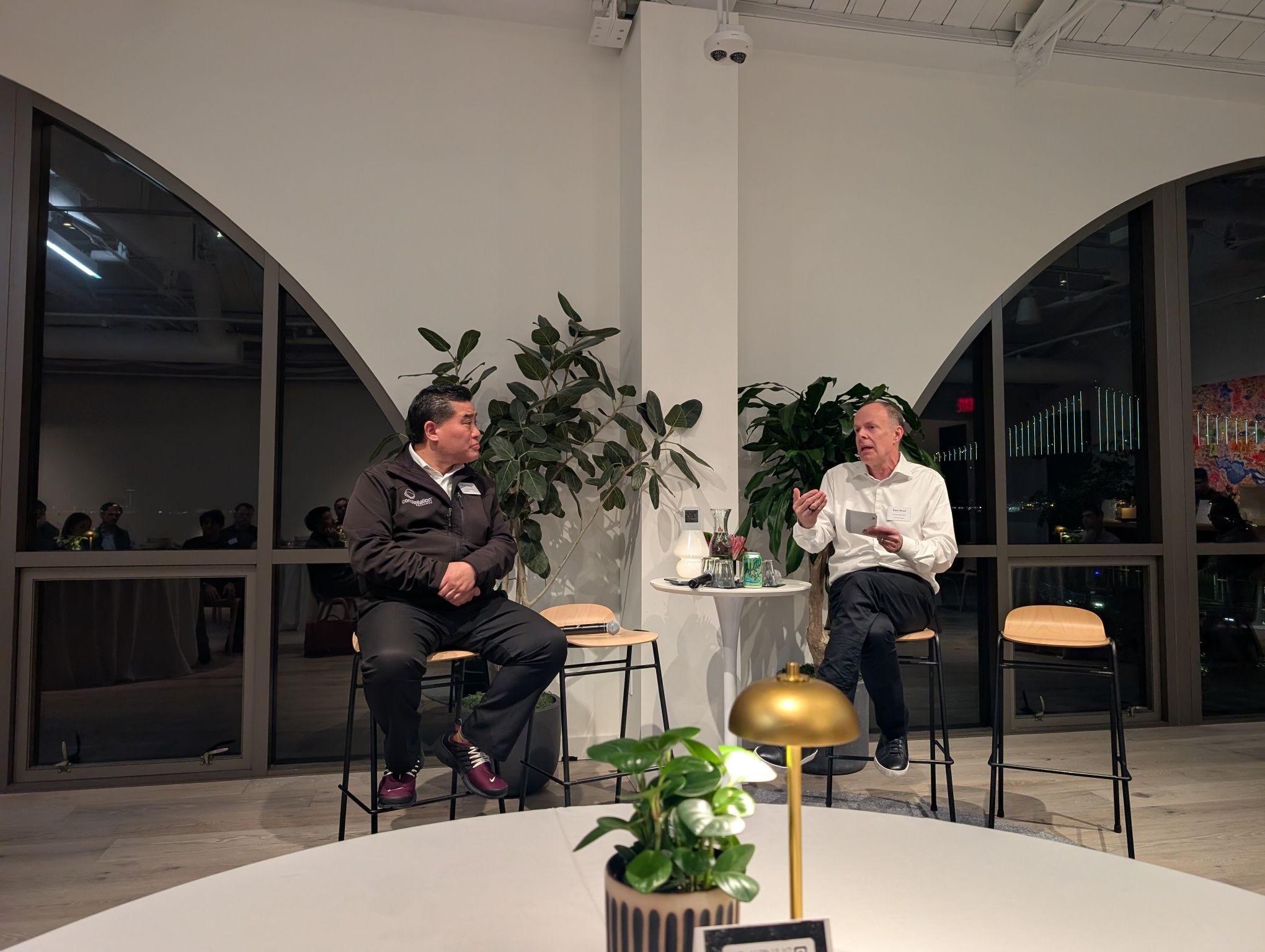
During a fireside chat, R “Ray” Wang and Sam Burd highlighted a simple but powerful idea: data is everything.
But the competitive advantage today is not merely possessing data. Most organizations already sit on enormous quantities of it.
The real advantage comes from knowing how to leverage that data to inform the next critical business decision.
AI is transforming dormant information into actionable intelligence. Instead of relying on static dashboards and delayed reporting cycles, companies can now:
Surface patterns instantly
Anticipate operational bottlenecks
Identify revenue opportunities earlier
Support faster, more informed decision-making across teams
In other words, data only becomes a strategic asset when it actively drives decisions.
The Hardest Part of AI: Finding the Right Use Case
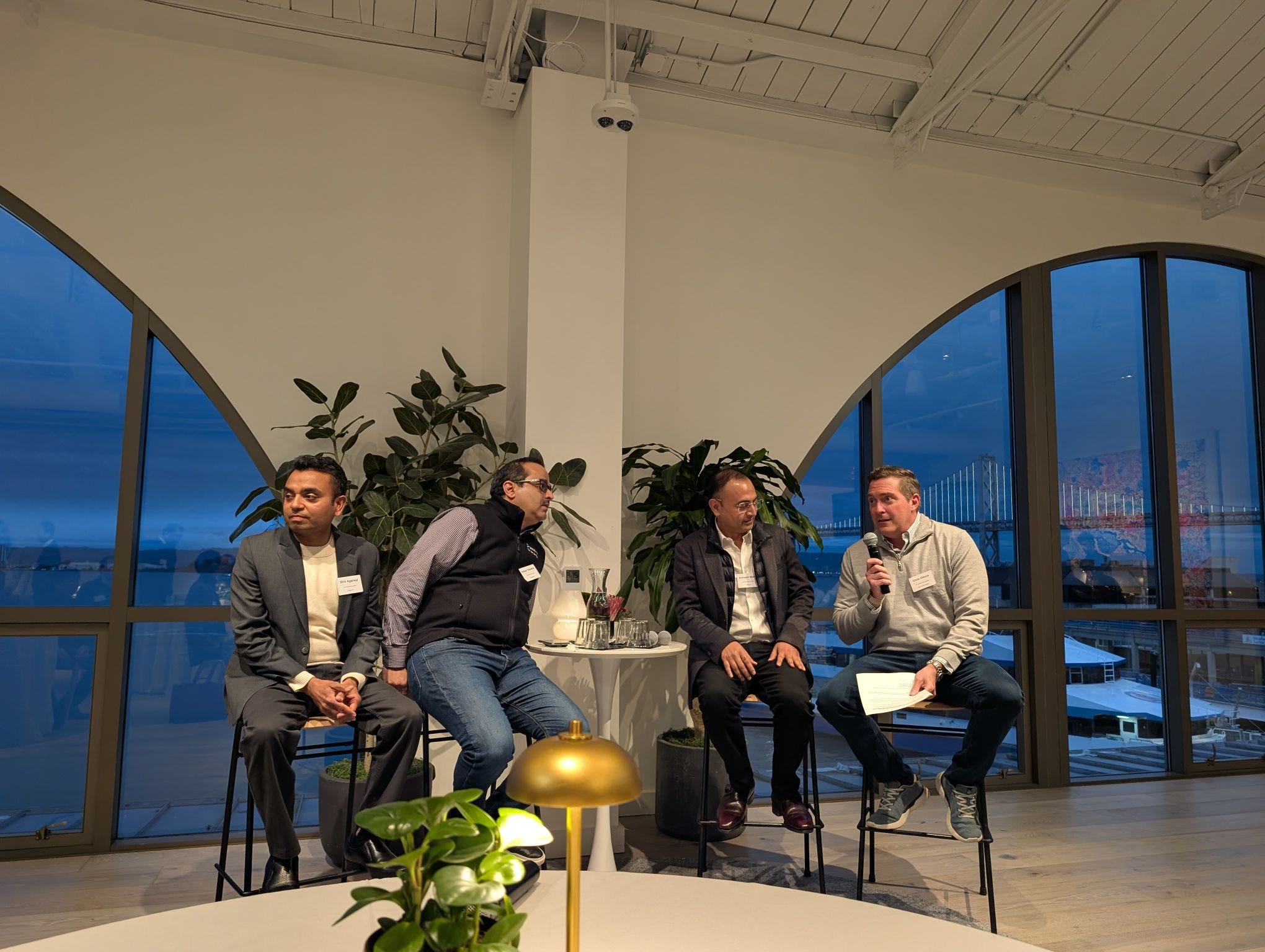
During the panel moderated by Satish Iyer, speakers aligned on a challenge many organizations are encountering: finding the right AI use case is often harder than implementing the technology itself.
Models are becoming more powerful and more accessible every year.
The real difficulty lies in identifying where AI can meaningfully improve the economics of a process.
The most successful AI applications tend to appear in environments with:
High coordination overhead
Repetitive information flow
Fragmented knowledge across multiple systems
Decision-making slowed by manual workflows
These are areas where AI can reduce friction without disrupting the underlying expertise of human operators.
The Governance Question
Another thought-provoking moment came from Chris Hillock, who raised a critical question:
Who owns governance in the age of AI?
As AI becomes embedded throughout organizations, governance can no longer be treated as an afterthought.
Companies must begin answering several fundamental questions:
Who is responsible for AI-driven decisions?
How should teams validate AI-generated insights?
How can organizations manage risk while maintaining operational speed?
Governance will increasingly become a cross-functional responsibility spanning leadership, technology, legal, and operations.
The companies that establish these frameworks early will be best positioned to scale AI responsibly.
AI as a Force Multiplier for Hardware Teams
At EverCurrent, we see these dynamics clearly in the world of hardware development.
Hardware teams often operate at full capacity. Engineers spend enormous amounts of time coordinating across tools, teams, and documentation systems just to keep projects moving.
Yet much of that effort is not engineering. It is coordination overhead.
AI can unlock additional bandwidth without requiring teams to grow.
By streamlining:
Coordination across teams
Status reporting
Live documentation
Knowledge retrieval across fragmented systems
AI accelerates development cycles while freeing engineers to focus on higher-impact work.
Instead of replacing expertise, AI amplifies it.
The New Operating Model
The broader takeaway from the evening was clear.
AI is not simply a technological shift. It represents a new operating model for organizations.
Companies that succeed in this era will learn how to:
Turn data into decisions
Identify high-impact AI use cases
Establish clear governance frameworks
Deploy AI to remove operational friction
When done correctly, the result is something businesses have long pursued but rarely achieved.
Revenue rises. Costs decline.
And the organizations that move fastest to adopt this new equation will define the next generation of industry leaders.